Heavy-Gauge Containment for Elk Operations
Pen Building for Elk in Stonewall for trophy operations and ranching setups that require taller panels and heavier steel than standard livestock fencing
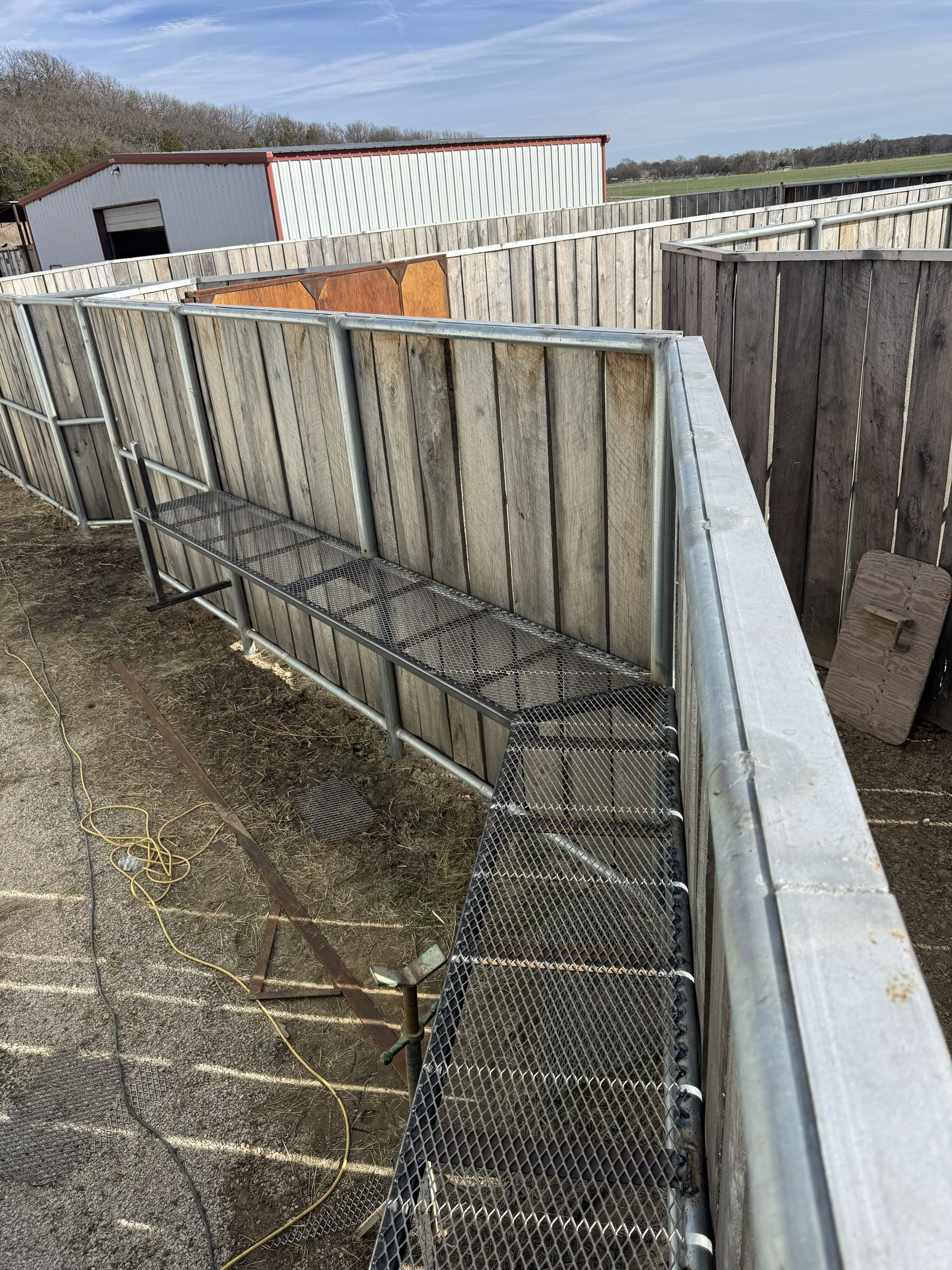
Elk ranching and high-fence trophy operations are expanding across Oklahoma and into Johnston and Pontotoc County hunting ranch corridors, but containment builds require heavier steel and taller panels than standard livestock fencing. All elk pen builds completed by X Solution's so far have been at least nine feet tall because the structure is built to the animal's actual force and flight behavior, not standard cattle fence specs. Elk will test corners, push against rails, and jump barriers that a cow wouldn't attempt, so the containment system has to account for their size, strength, and reactivity under pressure.
Handling lanes are incorporated into the design to move animals through the system without balking or turning around mid-lane, and all connections are welded in the field to eliminate flex or movement under load. Squeeze chutes are not included in the build scope—those are imported specialty equipment that you source separately and integrate into the handling system once the pen structure is complete.
Set up an on-site evaluation to confirm your panel height requirements, corner bracing needs, and handling lane layout before fabrication starts.
Why Elk Pens Need Heavy Steel
Elk are significantly larger and stronger than cattle, and they react to containment differently—they'll lean into a corner post with their full body weight, test rail welds by pushing against them, and attempt to jump panels that aren't tall enough. Heavy-gauge steel and nine-foot minimum panel height are standard because anything lighter or shorter creates a containment failure risk. Corner posts are larger diameter pipe, and rails are spaced and welded to prevent the animal from forcing their head or antlers through.
After the pen is built, you'll see a containment system that holds elk during handling, sorting, or loading without sagging, flexing, or creating gaps at the connections. Handling lanes guide the animals forward with minimal visual distraction, and welded joints stay tight under repeated stress. X Solution's has hands-on elk pen build experience and has received out-of-state client inquiries, including a Wisconsin project for fall or winter, which shows demand for this type of work extends well beyond Oklahoma.
The scope includes the pen structure, handling lanes, and corner bracing, but it does not cover feed systems, water lines, or perimeter fencing unless those are added to the project upfront. Elk operations also need to coordinate timing so the animals aren't introduced to the enclosure until the entire containment system is complete and tested.
What Ranchers Ask About Elk Pen Builds
Elk containment is a specialized build that most contractors have never tackled, and operators need to know what the infrastructure actually involves before committing to the project. These are the questions that come up during the planning phase.
Why do elk pens need to be nine feet tall?
Elk can jump over barriers that cattle wouldn't attempt, and a nine-foot minimum panel height prevents escape attempts by making the jump too high and too risky. Some operators go even taller depending on terrain slope and the specific animals being contained.
What type of steel is used for elk pen construction in Stonewall?
Elk pins use heavy-gauge pipe with thicker walls than standard cattle fencing, and corner posts are larger diameter to handle lateral load. The exact gauge depends on panel height, rail spacing, and the number of animals the system needs to contain at one time.
Can elk handling lanes be built with open rails or do they need solid sides?
Handling lanes for elk are typically built with closely spaced rails or solid sides to reduce visual distractions and keep the animal moving forward without balking. Elk react more strongly to movement and visual stimuli than cattle, so lane design affects how smoothly the system functions during sorting or loading.
How does elk pen building differ from red stag containment?
Elk are heavier and stronger than red stag, so the containment system requires thicker steel, taller panels, and stronger corner bracing. Both animals need purpose-built handling lanes, but elk exert more force on the structure and need more robust welding and post setting to prevent failure under load.
What's not included in an elk pen build that I need to plan for separately?
Squeeze chutes, feed systems, water lines, and perimeter fencing are not included in the pen build unless specified upfront. Elk operations also need to coordinate animal introduction timing so the containment system is fully complete and tested before stocking begins.
X Solution's builds elk pens with heavy steel and nine-foot minimum panel height across rural Oklahoma and has handled inquiries from operators outside the state. Request a site consultation to review your containment layout, post setting requirements, and handling lane design before the build starts.